
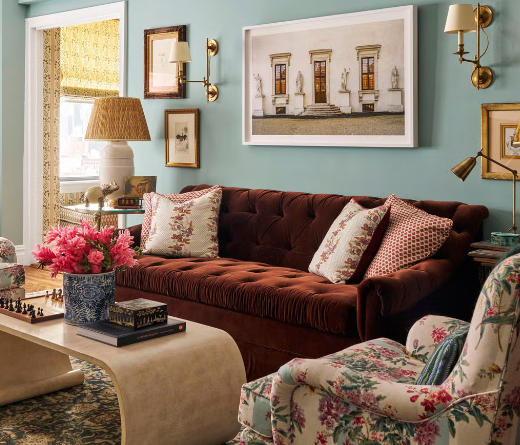
Color can dramatically change the perception of space, especially in small living rooms. By choosing energetic color schemes, you can create an inviting and vibrant environment that looks larger and feels more open. Let’s explore how to use color to enhance your small living room.
1. Embrace Bright and Bold Colors
Bright colors like sunny yellows, lively blues, or striking reds can add a dash of energy to your living space. When used as accent colors on walls, furniture, or decor items, they create focal points that draw the eye upward, giving a sense of openness. For example, painting one wall a bold yellow while keeping others neutral can create a balanced yet vibrant feel in a compact area.
Remember to balance these bright colors with softer shades to avoid overwhelming the space. Using a bright red sofa paired with pastel-colored pillows or a striking blue rug against soft cream walls can keep the energy alive without sacrificing a sense of calm. The trick is to mix bold hues with softer tones that allow your small living room to breathe.
-
- Choose one bold color to act as an accent.
-
- Pair bright shades with neutral tones to maintain balance.
-
- Consider using artwork that features energetic colors.
-
- Try bright-colored throw pillows or blankets for a quick refresh.
-
- Use plants to add a splash of lively green, complementing any color scheme.
2. Use Color Blocking for Visual Interest
Color blocking is a technique where two or more colors are used in separate segments within a space to create a dynamic look. In a small living room, this technique can make the space feel more structured and visually expansive. For instance, you could paint a part of the wall a vibrant green and another section a vivid orange, creating a lively contrast that energizes the room.
This method encourages creativity and allows you to play with various colors and patterns. You can apply color blocking to furniture as well—think of a yellow coffee table against a navy sofa, or even using colorful wall shelves to hold books and trinkets. Color blocking not only adds texture but also helps organize different areas of the room.
-
- Choose a maximum of three colors to avoid chaos.
-
- Use painter’s tape for clean, sharp lines when blocking colors.
-
- Experiment with different shapes (geometric, organic) for added interest.
-
- Use similar tones of different colors for a more harmonized look.
-
- Incorporate accessories in the color scheme to tie the look together.
3. Incorporate Earthy and Natural Tones
While bright colors are fantastic for energy, earthy tones like terracotta, olive green, and mustard yellow can provide warmth and balance in a small living room. These colors evoke a sense of calmness while maintaining vibrancy, particularly when paired with natural materials like wood or stone. A terracotta vase with fresh flowers against a painted olive wall can create an earthy yet energetic vibe.
Using natural tones gives a peaceful backdrop that allows brighter accents, such as artwork or cushions, to pop without overwhelming the senses. The key is to find a harmonious balance through layering textures and shades that complement one another. A cozy, earthy palette can make your small living room feel inviting and comfortable, encouraging relaxation while keeping energy levels high.
-
- Mix a variety of earthy tones for depth and interest.
-
- Add textures like wood, jute, or rattan for extra warmth.
-
- Use plants in earthy pots to enhance the natural vibe.
-
- Incorporate soft furnishings in natural fabrics to complement the colors.
-
- Play with lighting to enhance the warmth of earthy tones, particularly in the evening.
4. Create a Cohesive Color Palette
A cohesive color palette is crucial for making a small living room feel larger and more inviting. When designing your space, choose a primary color that will dominate the room and select two or three accent colors to complement it. This can mean using shades of blue for the main color and incorporating soft greys and whites for accents, creating a fresh and open ambiance.
This approach ensures every element in your living room feels intentional and connected, giving the appearance of a larger and more organized space. Accessories like cushions, throws, and wall art should follow suit, aligning with your chosen palette while allowing for a few playful deviations to keep things interesting.
-
- Start with a mood board to visualize your color choices.
-
- Stick to one or two primary colors for walls and larger furniture.
-
- Use accent colors in small accessories for cohesion.
-
- Change seasonal decor to refresh the palette while maintaining coherence.
-
- Paint smaller pieces of furniture to match the overall scheme for a unified look.
By adopting energetic color schemes in your small living room, you can create a space that feels inviting and vibrant. Experimenting with colors, patterns, and textures can transform your space, encouraging you to embrace your style. Don’t hesitate to consult a professional to help design the perfect energetic palette that reflects your personality and maximizes your living space!