
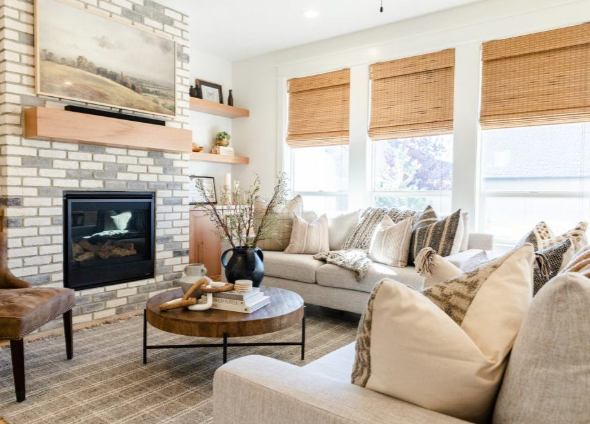
Winter is the perfect season to make your living room feel warmer, softer, and more inviting. As temperatures drop and people spend more time indoors, small decorating changes can make a noticeable difference in comfort and atmosphere.
The best Winter Living Room Decorating Ideas focus on texture, warmth, practical comfort, and seasonal details rather than completely redesigning the room. By layering fabrics, adjusting lighting, introducing deeper colors, and adding a few natural elements, you can create a living space that feels comfortable throughout the colder months.
Layer Soft Throws and Blankets
One of the easiest ways to update a living room for winter is to add soft blankets.
Drape a chunky knit throw over the sofa, fold a wool blanket across an armchair, or keep a basket of extra blankets near the seating area.
Different materials can create visual depth. Wool, fleece, cotton, faux fur, and knitted fabrics all work well during winter.
Avoid using too many competing patterns. If your sofa already has patterned cushions, simple solid-colored throws can create a more balanced appearance.
Blankets should also be easy to reach, making the room feel practical as well as cozy.
Add Seasonal Throw Pillows
Throw pillows can quickly change the appearance of a living room without requiring major furniture updates.
For winter, consider fabrics such as velvet, boucle, wool, corduroy, or thick woven cotton.
Colors can range from warm neutrals to deeper seasonal shades such as forest green, burgundy, navy, chocolate brown, or rust.
You do not need to replace every pillow. Simply changing a few cushion covers can make the room feel more appropriate for the season.
Mixing different textures while keeping the colors coordinated creates a layered winter look.
Use a Warm Area Rug
Hard flooring can make a living room feel colder during winter.
A large area rug adds softness underfoot and helps visually anchor the seating arrangement.
Wool rugs, textured flatweaves, and plush low-pile designs are practical options.
Choose a rug that extends underneath at least the front legs of the sofa and chairs. This creates a more connected furniture arrangement.
If your living room already has a rug, consider layering a smaller textured rug on top for additional warmth and visual interest.
Create Softer Lighting
Lighting has a major influence on how a living room feels during winter.
Instead of relying only on bright overhead lighting, use several smaller light sources around the room.
Table lamps, floor lamps, wall sconces, and reading lamps can create a softer environment.
Warm-toned bulbs generally work better for cozy living spaces than very cool white lighting.
Place lamps near sofas, chairs, bookshelves, and dark corners to create balanced illumination.
Candles can also add seasonal character, especially on coffee tables, mantels, or sideboards, as long as they are used safely.
Make the Fireplace a Focal Point
If your living room has a fireplace, winter is the ideal time to make it a central feature.
Arrange seating so that the fireplace becomes part of the main conversation area.
Keep mantel decorations simple. A few candles, branches, framed artwork, or seasonal greenery can be enough.
For a rustic look, stacked firewood can also become part of the room’s decor when stored neatly.
Even if the fireplace is not used regularly, its architectural presence can help create a strong winter focal point.
Bring in Natural Materials
Natural materials work especially well in winter interiors because they add texture and warmth.
Wood furniture, woven baskets, ceramic objects, stone accessories, and natural fibers can all make a room feel more grounded.
A wooden coffee table or side table can soften a room dominated by painted surfaces.
Woven baskets are useful for storing blankets, magazines, or firewood.
Ceramic vases and bowls can add subtle texture without making the space feel overly decorated.
Natural materials also work well with many interior styles, including farmhouse, Scandinavian, modern, and traditional spaces.
Decorate With Winter Greenery
Greenery can bring color into a winter living room without making it feel overly seasonal.
Evergreen branches, eucalyptus, pine, cedar, or other foliage can be arranged in simple vases.
Small indoor plants can also provide contrast against neutral winter colors.
If you prefer artificial greenery, choose designs with realistic shapes and muted tones.
Garlands can be placed along mantels, shelves, or console tables.
Avoid using too much greenery in a small room, since a few carefully placed arrangements usually have greater impact.
Introduce Deeper Winter Colors
Winter is a good time to incorporate richer colors into your living room.
Deep green, warm brown, charcoal, navy, burgundy, rust, and muted red can create a more intimate atmosphere.
These colors do not need to dominate the room.
Instead, introduce them through pillows, throws, artwork, rugs, or decorative accessories.
If your living room has a light neutral base, darker accents can create strong contrast.
For rooms that already contain dark furniture, lighter beige, cream, or warm white textiles can help maintain balance.
Create a Cozy Reading Corner
A winter living room can become more functional by including a dedicated reading area.
Place a comfortable chair near a window, bookshelf, or floor lamp.
Add a small side table for books and drinks, along with a soft blanket and cushion.
A compact reading corner works well even in smaller living rooms.
This type of arrangement creates a comfortable place to spend quiet winter evenings while also making use of an otherwise empty corner.
Update the Coffee Table
The coffee table can help reinforce the winter theme without requiring elaborate decor.
Use a simple arrangement such as a stack of books, a ceramic bowl, candles, or a vase with branches.
A wooden or stone tray can help group smaller items together.
Seasonal objects should remain low enough that they do not block conversation across the room.
Leave some empty surface space so the table remains functional for drinks, books, or everyday items.
Add Heavier Curtains
Curtains can influence both the appearance and comfort of a living room.
During winter, heavier fabrics can help create a more substantial and enclosed feeling.
Velvet, lined cotton, linen blends, or thick woven curtains work well.
Floor-length curtains can also make windows appear larger and give the room a more finished look.
Choose colors that coordinate with the existing furniture rather than introducing an unrelated seasonal palette.
If natural light is limited during winter, open curtains fully during the day to keep the room bright.
Use Wood Tones for Added Warmth
Wood is one of the easiest materials to use when creating a warmer winter interior.
Coffee tables, side tables, shelving, picture frames, and decorative bowls can all introduce natural wood tones.
Medium and darker woods often create a stronger winter feeling, while lighter woods work well in Scandinavian-inspired rooms.
You do not need every wooden element to match exactly.
A mixture of compatible wood tones can make the space feel more natural and less formal.
Add Seasonal Artwork
Changing artwork is another simple way to refresh a living room.
Winter-inspired landscapes, botanical prints, abstract art in deeper colors, or black-and-white photography can subtly reflect the season.
You can also update smaller framed prints placed on shelves or console tables.
Rather than filling every wall with seasonal imagery, choose one or two pieces that complement the room’s existing style.
This keeps the decor sophisticated and easy to transition into spring.
Keep the Space Comfortable and Uncluttered
Winter decorating often involves adding more textiles and accessories, but too many items can make a room feel crowded.
Maintain some open surfaces and clear pathways.
Store unnecessary objects in baskets, cabinets, or drawers.
A room can feel cozy without being filled with decorations.
Focus on useful elements such as blankets, lamps, rugs, cushions, and functional storage before adding purely decorative objects.
This approach creates a more relaxed atmosphere.
Create a Warm Winter Living Room
The most effective Winter Living Room Decorating Ideas are usually simple changes that improve both comfort and appearance.
Soft blankets, textured pillows, warm rugs, layered lighting, natural materials, and seasonal greenery can transform an everyday living room into a comfortable winter retreat.
Rather than changing the entire interior, focus on layering textures and introducing a few deeper colors while maintaining clear circulation and practical furniture arrangements.
With thoughtful seasonal updates, your living room can remain warm, welcoming, and functional throughout the coldest months of the year.