
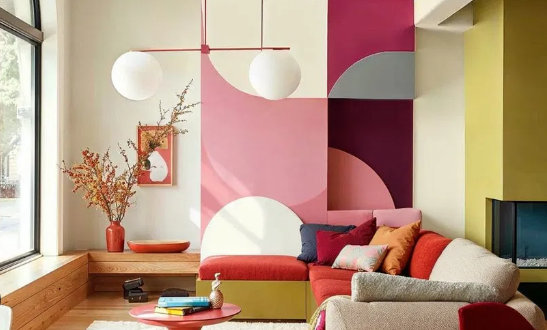
Color blocking in small living rooms can transform your space from ordinary to extraordinary. By strategically using blocks of color, you can create visual interest, enhance the room’s dimensions, and even change its mood. This blog offers innovative color blocking ideas tailored for small living spaces.
1. Choose the Right Color Palette
The first step in successful color blocking is selecting a harmonious color palette. Consider colors that complement each other, such as pastels paired with a bold primary, or cool tones like blues and greens matched with warm shades like yellows and oranges. Tools such as color wheel apps can help visualize combinations and guide you in creating a balanced aesthetic.
Additionally, think about the atmosphere you wish to create. Lighter shades can make the room feel larger and more open, while darker and bolder colors can add depth and coziness. For example, a combination of soft cream with a rich navy can make a space feel both inviting and sophisticated.
-
- Use a color wheel or app for color combinations.
-
- Choose 3-5 colors to maintain cohesion.
-
- Consider the room’s natural light when selecting colors.
-
- Incorporate trim or accent colors for contrast.
2. Create Focal Points with Color
In a small living room, creating focal points can draw the eye and define zones. This can be accomplished by color blocking accent walls, statement furniture pieces, or art. For example, painting one wall a bold color such as teal while the rest remain neutral can add a striking effect without overwhelming the room.
Moreover, think about block areas using furniture. If you have a sofa in a vibrant color, complement it with a contrasting rug or throw pillows in solid colors that echo the sofa. This cohesive approach will enhance your room’s visual interest while still ensuring it feels well-organized and inviting.
-
- Select one wall for a bold color block.
-
- Balance bold colors with neutral or muted shades.
-
- Choose furniture that doubles as a statement piece.
-
- Incorporate art that ties your color scheme together.
3. Utilize Accessories for Color Blocking
Accessories are a fantastic way to incorporate color blocking without committing to permanent changes. Items such as cushions, throws, vases, and artwork can introduce blocks of color that enhance your living room’s theme. For instance, a cluster of brightly colored pillows on a neutral sofa can create a lively focal point.
Moreover, don’t forget about the potential of window treatments and rugs. A colorful area rug can anchor a room and provide a base for your color blocking. Alternatively, bright curtains can frame your windows and add vibrancy to the overall aesthetic, ensuring that the space feels well-rounded and dynamic.
-
- Mix and match vibrant pillows in complementary colors.
-
- Coordinate rugs with other accessories for fluidity.
-
- Use art pieces that incorporate multiple colors.
-
- Consider colorful throws that can be draped over furniture.
4. Experiment with Patterns and Textures
Color blocking doesn’t have to be just a matter of solid colors; you can also introduce patterns and textures into the mix. Patterns can add depth and interest, making small spaces feel larger and more dynamic. For example, a striped throw paired with a polka-dotted sofa might seem too busy at first glance, but when properly balanced with neutral walls, it can create a playful yet organized feel.
Textures can amplify the impact of your color blocking strategy. Consider a mix of glossy and matte finishes such as a shiny, yellow coffee table paired with a matte gray wall. This contrast can not only enhance the color but also add an intriguing layer to the decor that encourages visual exploration of the space.
-
- Incorporate different textures like velvet, cotton, or metal.
-
- Pair geometric patterns with solid colors for balance.
-
- Limit the number of patterns to maximize coherence.
-
- Ensure patterns reflect your chosen color palette.
5. Use Lighting for Enhancement
Lighting can significantly affect how colors appear in a room. Natural light can highlight the brightness of your chosen color blocks, while artificial lighting can create warmth that softens bolder shades. Incorporate layered lighting options including floor lamps, table lamps, and wall sconces to define your color blocks further.
Moreover, colored light bulbs can add an unexpected twist to your color blocking strategy. Consider colored bulbs for lamps or light fixtures to accentuate your selected colors. This can enhance the mood and reinforce the overall theme of your small living room.
-
- Use a mix of ambient, task, and accent lighting.
-
- Experiment with colored bulbs for unique effects.
-
- Position lamps to highlight specific color blocks.
-
- Change bulbs seasonally to refresh the atmosphere.
Incorporating color blocking into your small living room can breathe new life into your space while showcasing your personality and style. By carefully selecting colors, creating focal points, utilizing accessories, experimenting with patterns and textures, and employing strategic lighting, you can create the perfect environment. So why not take the plunge and start turning your dream living space into a colorful reality? Happy decorating!