
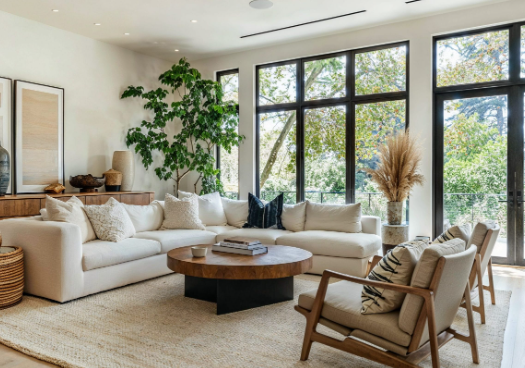
Japandi style elegantly merges Japanese simplicity with Scandinavian functionality, making it an ideal aesthetic for small living rooms. By focusing on muted colors and natural materials, you can create a serene environment that feels spacious and inviting. Let’s explore some color ideas that embody the Japandi philosophy while enhancing your small space.
1. Earthy Neutrals
Earthy neutrals form the backbone of the Japandi color palette, providing a calm and understated foundation. Shades like taupe, beige, and soft gray can help create an atmosphere of tranquility and spaciousness. These colors also serve as a perfect backdrop for wooden furniture and natural textiles, reinforcing the organic feel characteristic of both Japanese and Scandinavian designs.
To enhance your small living room, consider using these earthy neutral tones on larger areas such as walls and upholstery. For example, a beige sofa will blend beautifully with light gray walls, promoting a cohesive and serene look. Additionally, small accessories like cushions or throws in similar tones can add warmth and texture without overwhelming the space.
-
- Choose one main neutral color for larger areas.
-
- Incorporate varying shades for depth using accessories.
-
- Mix textured fabrics like linen and wool for comfort.
-
- Avoid overly bright or dark colors that can shrink the space.
2. Soft Blues and Greens
Soft blues and greens evoke the calming essence of nature, making them perfect for a Japandi-inspired living room. Light hues like powder blue or muted sage can offer a gentle contrast to earthy neutrals, reinforcing a harmonious and fresh ambiance. These colors remind us of serenity found in nature, becoming an ideal choice for creating a peaceful retreat within your home.
When applying these colors, they can be introduced through accent walls, artwork, or decorative elements. For instance, a soft blue accent wall can effortlessly elevate the room without overpowering the predominantly neutral palette. Additionally, greenery in the form of plants can add an organic touch that complements these refreshing tones.
-
- Apply these colors in subtle ways, such as accent pieces.
-
- Use plants to naturally tie these shades together.
-
- Select artwork that features soft blues and greens for visual interest.
-
- Avoid dark blues or greens that could make the room feel smaller.
3. Warm Wood Tones
Incorporating warm wood tones into your Japandi color scheme can enhance the cozy atmosphere of a small living room. Shades like oak, walnut, or bamboo introduce organic warmth while complementing the overall aesthetic. Wooden furniture not only adds texture but also brings an element of nature indoors, which is an essential component of Japandi design.
To effectively use wood tones, choose key pieces like a coffee table or shelving that feature rich wood grains. A slightly darker wooden floor can add richness to the overall design while remaining light enough to avoid feeling cramped. You can also utilize wood finishes on smaller items such as picture frames or candleholders to maintain a seamless look throughout the room.
-
- Opt for furniture with light to medium wood tones for balance.
-
- Mix various wood finishes to create visual interest.
-
- Incorporate at least one statement wood piece to anchor the room.
-
- Maintain a consistent color temperature between wood items.
4. Pops of Muted Colors
Pops of muted colors can serve as delightful accents that bring personality to your Japandi living room without overwhelming the senses. Soft pastels like blush pink or dusty lavender can uplift the tranquil color palette, providing visual interest and depth. These colors can also tie in well with natural elements, enhancing the harmony of your space.
Consider using these muted shades in small doses—think cushions, throws, or wall art—to maintain balance. A pastel cushion on a neutral sofa can draw attention without being distracting. Alternatively, a beautifully framed piece of art featuring muted colors can act as a conversation starter while complementing your overall design.
-
- Limit the use of accent colors to 1-2 items for subtlety.
-
- Choose shades that enhance your existing palette rather than compete with it.
-
- Incorporate various materials for texture when using accent colors.
-
- Use muted colors to draw attention to focal points in the room.
Creating a Japandi-inspired small living room is achievable by focusing on serene and cohesive color choices. By incorporating earthy neutrals, soft blues and greens, warm wood tones, and pops of muted colors, you can transform your space into a serene oasis. Consider consulting a professional designer or begin experimenting with these ideas on your own to create a space that resonates with your personality and lifestyle.