
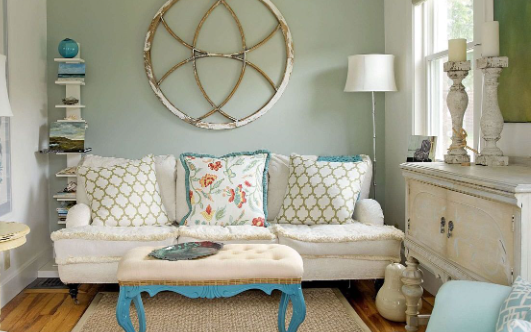
Having a small living room doesn’t mean you have to compromise on style or function. With the right use of color, you can create an illusion of space and make your small area feel inviting and expansive. Here are some space-saving color tricks to consider for your cozy space.
1. Embrace Light Colors
Light colors are essential for small living rooms as they can instantly enhance the perception of space. Lighter shades of whites, creams, or pastels reflect light better and make the walls feel like they’re receding, which creates an open ambiance. For example, painting your walls a soft beige or pale blue can help create a calming atmosphere that visually expands the room.
In addition to wall color, you can extend this light color scheme to your furniture and decor. Opt for lighter upholstery fabrics and accessories. Using sheer curtains in light hues will allow natural light to flow while still maintaining privacy. When combined, the result is a soft, airy feel that makes the space feel much larger than it is.
-
- Choose soft, light shades for walls and big furniture pieces.
-
- Incorporate lighter flooring options, like light wood or tile.
-
- Use sheer or light-filtering curtains for natural light enhancement.
-
- Aim for a monochromatic scheme with varying shades of a single color.
2. Utilize Dark Accents Wisely
While light colors can open up a space, strategically placing dark accents can add depth and sophistication. A dark accent wall, for example, can create a focal point that draws the eye, making the room appear longer or wider. You might choose a deep navy or charcoal for a single wall, paired with lighter decor elements to balance it out.
Accessories in darker colors can also help anchor your design while adding character. Think of darker cushions, artwork, or a coffee table. These elements not only enrich the visual experience but also guide the eye around the room, preventing it from becoming flat or monotonous. When mixing dark hues, it’s crucial to keep the overall palette balanced to maintain a spacious feel.
-
- Select one wall to paint a deep color as an accent.
-
- Incorporate dark furniture pieces to create contrast.
-
- Choose accessories like cushions or rugs to introduce dark elements without overwhelming the space.
-
- Balance dark accents with plenty of lighter components to avoid a gloomy atmosphere.
3. Use Color to Create Zones
In a small living room, defining different areas can help the space feel larger and more functional. You can use shades to create visual zones, such as a reading nook versus the main seating area. For instance, a small area could feature a soft mint green to denote a relaxed reading space, while the rest of the living room remains a calm light beige. This subtle differentiation adds character and makes choices within the space more straightforward.
In addition to paint, you can use accessories in complementary colors to enhance these zones. Different patterns and textures can also be strategically introduced to signal shifts in the space. By carefully selecting colors, you create natural divisions without physical barriers, keeping the area open and inviting.
-
- Choose a specific color for each zone that matches the function of the area.
-
- Utilize rugs to clearly define spaces without needing walls.
-
- Incorporate multi-functional furniture that fits the color scheme and offers utility.
-
- Use artwork or decorative accents to strengthen the zone’s theme.
4. Accessorize with Complementary Colors
Accessories offer an excellent opportunity to bring in color without overwhelming your space. Choosing complementary colors for cushions, throws, or artwork can pull a room together while still maintaining a sense of openness. For example, if your walls are painted in soft grey, adding mustard yellow and teal as accent colors can create a vibrant yet harmonious look.
The key is to introduce color through smaller items that are easy and inexpensive to change. This flexibility allows you to refresh your space regularly, making it feel new and exciting. Don’t be afraid to mix patterns as long as they share complementary shades—they can add liveliness while keeping the environment feeling spacious and inviting.
-
- Pick 2-3 accent colors that complement your main color scheme.
-
- Incorporate colorful artwork that fits with your chosen palette.
-
- Use decorative accessories in varying shapes and textures for visual interest.
-
- Change out accessories seasonally to keep the look fresh without a full overhaul.
Creating an inviting and spacious feeling in a small living room is entirely possible with strategic color choices. By combining light colors, dark accents, zoning, and complementary accessories, you can cultivate a stylish and open environment. Don’t hesitate to experiment with different palettes and textures—your small space deserves to shine!