
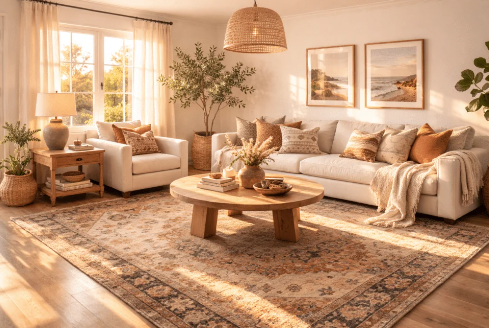
Lighting plays a crucial role in how colors are perceived in small living rooms. The right kind of lighting can enhance the cozy atmosphere of a small space, making it feel larger and more inviting. Understanding the relationship between light and color can help you make informed decisions for your home.
1. Understanding Natural vs. Artificial Light
Natural light is often considered the best source of illumination when it comes to showcasing colors. The sun’s rays provide a full spectrum of light that can enhance hues naturally, allowing them to shine in their true form. For instance, a soft blue wall may appear serene and calming during the day but can look entirely different under artificial lighting in the evening, potentially becoming dull or cold.
On the other hand, artificial light sources, such as incandescent, fluorescent, or LED bulbs, can significantly alter the appearance of colors in your living room. Incandescent bulbs produce a warm glow that makes colors appear richer, while fluorescent lights tend to emit a cooler, harsher light that can wash out delicate shades. Understanding the type of artificial lighting you select is key to how colors will interact within your space.
-
- Experiment with different times of the day to observe how colors change.
-
- Consider installing sheer curtains to maximize natural light.
-
- Choose light fixtures that complement the desired color scheme.
-
- Test incandescent, LED, and fluorescent lights to see what suits your space.
2. The Impact of Color Temperature
The color temperature of your lighting, measured in Kelvin (K), can greatly influence the mood and color perception in your living room. Warm colors, ranging from 2700K to 3000K, bring a cozy and inviting feel, making small spaces appear more intimate. On the contrary, cooler colors (4000K and above) can lend a more modern and spacious vibe, but may also feel sterile if overused.
Choosing the appropriate color temperature often comes down to the effect you want to achieve in your living room. If your walls are painted in warm tones, pairing them with warm-colored bulbs will enhance their richness. Conversely, cooler walls can benefit from cooler lighting to highlight designs and textures. A balanced approach strikes a perfect harmony, making your small living room comfortable yet stylish.
-
- Select bulbs that match the color temperature of your paint.
-
- Use dimmers to adjust lighting based on the time of day.
-
- Mix warm and cool lighting for a layered effect.
-
- Don’t overlook accent lighting to highlight specific colors or textures.
3. The Role of Accent and Ambient Lighting
Accent and ambient lighting play distinct yet interconnected roles in how colors appear within a small living room. Ambient lighting serves as the primary light source, illuminating the entire space. This could be achieved through ceiling fixtures, wall sconces, or floor lamps. The choice of ambient lighting color can dictate how colors reflect off surfaces, either amplifying or muting shades.
Accent lighting, on the other hand, focuses on illuminating specific features, creating focal points that can enhance color perception. A well-placed wall sconce can make a colorful artwork pop, while an illuminated bookshelf can add warmth to cooler colors in the room. Strategically using both forms of lighting allows for an engaging visual experience that celebrates the room’s color palette.
-
- Incorporate multiple light sources for depth and variety.
-
- Use wall sconces to create attractive focal points.
-
- Illuminate artwork or plants to enhance their colors.
-
- Don’t forget about table lamps; they can add both task lighting and ambiance.
4. Creating Color Balance
In a small living room, achieving color balance is essential for creating a harmonious space. The way lighting interacts with your chosen color palette can make the room feel either pulled together or chaotic. For example, combining overly bright colors with dramatic shadows created by directional lighting can create an overwhelming visual effect. Instead, aim for a balance between bright and muted hues, facilitated by the right lighting arrangement.
Consider using a neutral base for your large furniture pieces, while introducing pops of color through accents like pillows, art, or throws. These can be strategically lit to enhance visual appeal without overwhelming the senses. This method helps ensure the room feels cohesive regardless of the lighting conditions.
-
- Choose a neutral base to promote harmony and balance.
-
- Test colors in day and night to see how they behave under different lights.
-
- Rotate accents seasonally for a fresh look without major changes.
-
- Keep textures in mind; they can add depth to the color scheme.
Understanding how lighting affects color in your small living room can transform the way you experience your space. By experimenting with different lighting options and paying attention to how they interact with your colors, you can create a more inviting and balanced atmosphere. Don’t hesitate to consult a lighting professional for tailored advice or to explore further creative options for your home.