
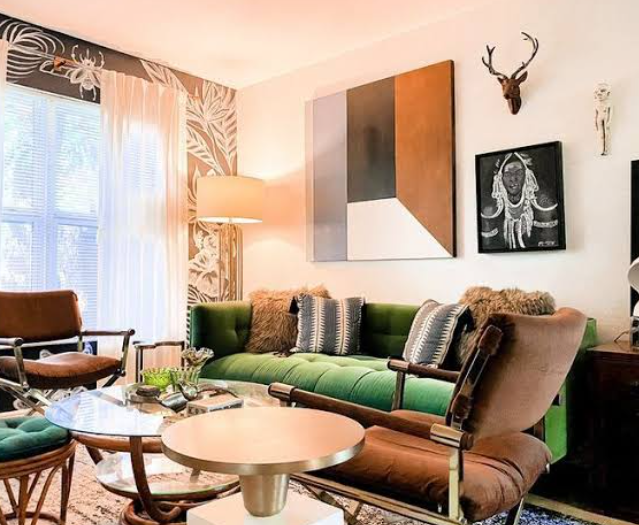
Designing a small living room can be challenging, especially when it comes to color choices. Opting for the right palette can create a functional and inviting space that feels spacious and cozy simultaneously.
1. Understanding Color Psychology
Color isn’t just about aesthetics; it plays a significant role in how we perceive space. Warm colors like reds, oranges, and yellows can make a room feel smaller and more intimate, while cool colors like blues and greens tend to open up space, making it feel larger. Understanding this can help you make informed choices that enhance the functionality and mood of your small living room.
For example, a soft blue can evoke tranquility and calmness and help demarcate areas of your living room, making it feel airy. Moreover, lighter shades of colors, like pale yellows or light grays, can reflect light, enhancing the feeling of spaciousness. Combining these hues with strategic décor can lead to a well-organized and appealing living area.
-
- Choose light shades to enhance the feel of space.
-
- Incorporate a few warm tones to add coziness.
-
- Experiment with accent colors for a vibrant touch.
-
- Use color swatches in your room before making decisions.
2. Creating a Color Flow
Creating a seamless color flow is essential in small spaces to prevent them from feeling cramped. When colors transition smoothly from one area to another, the whole room starts to feel cohesive. A monochromatic color scheme, which utilizes varying shades and tints of a single color, can significantly help in establishing this flow throughout your living room.
An excellent example of this would be a living room that employs different shades of green, starting with a soft mint on the walls, complemented by a deeper forest green for accents in cushions or artwork. This approach creates a gradient effect, tricking the eye into believing that the space is more expansive than it really is. Additionally, anchoring your room with neutral colors, like whites or beiges, can provide a base that harmonizes well with bolder hues.
-
- Use a single color scheme to create flow.
-
- Balance bold colors with neutrals.
-
- Incorporate varying shades and textures.
-
- Avoid abrupt color changes.
3. Functional Accessorizing with Color
Selecting accessories with color accents can elevate the overall design and functionality of your small living room. Instead of overstuffing your space with furniture, consider using colorful accessories like throw pillows, rugs, and artwork to introduce colors without overwhelming the area. For instance, bright cushions on a neutral sofa can provide bursts of color and can easily be swapped out when your taste changes.
In addition, visual functionality should be a consideration when choosing accessories. Multi-functional pieces, such as a coffee table that serves as storage, can be painted or adorned in colors that complement your palette, aiding in both design and practicality. This allows for a pleasant aesthetic without sacrificing valuable floor space.
-
- Incorporate colorful throw pillows or rugs.
-
- Opt for multi-functional furniture pieces.
-
- Regularly update smaller accessories for fresh looks.
-
- Use art that ties your colors together.
4. Lighting and Its Impact on Color
Lighting can drastically change how colors appear in your living room. Natural light casts colors bright and lively, while artificial lighting can hide or alter their true essence. Understanding how different light sources interact with your chosen palette is crucial. For example, warm-toned bulbs can enhance warm colors, making your space feel more inviting, while cool-toned bulbs can wash out softer hues.
To achieve desired effects, consider a balanced lighting plan that incorporates multiple light sources, such as floor lamps and wall sconces. This can help highlight specific colors and create a dynamic atmosphere. It may also be worth trying out dimmers or adjustable light fixtures to control the ambiance throughout different times of the day and different moods.
-
- Utilize multiple light sources for versatility.
-
- Experiment with different bulb types for variation.
-
- Consider the room’s natural light availability.
-
- Invest in dimmers for adjustable ambiance.
In conclusion, functional color design for small living rooms requires a thoughtful approach that balances aesthetics and practicality. By understanding color psychology, creating a cohesive flow, accessorizing wisely, and considering lighting, you can craft a beautiful and functional space. Take the time to assess your own living area, and don’t hesitate to seek professional guidance to achieve the best results.